


If you’re thinking about upgrading your hot water system, you’ve probably come across unvented hot water cylinders and wondered how they actually work with your current setup. It’s a question we hear all the time from homeowners chatting to a boiler installer while planning an upgrade. Do you need a boiler with an unvented hot water cylinder, or can it run on its own?
Across Crawley, East Grinstead, Horley and Horsham, more people are switching to unvented systems for better pressure and improved performance. But system compatibility really matters. Get it wrong and you could end up with poor performance or unnecessary expense. Get it right and you’ll have strong, reliable hot water throughout the house.
What Is an Unvented Hot Water Cylinder?
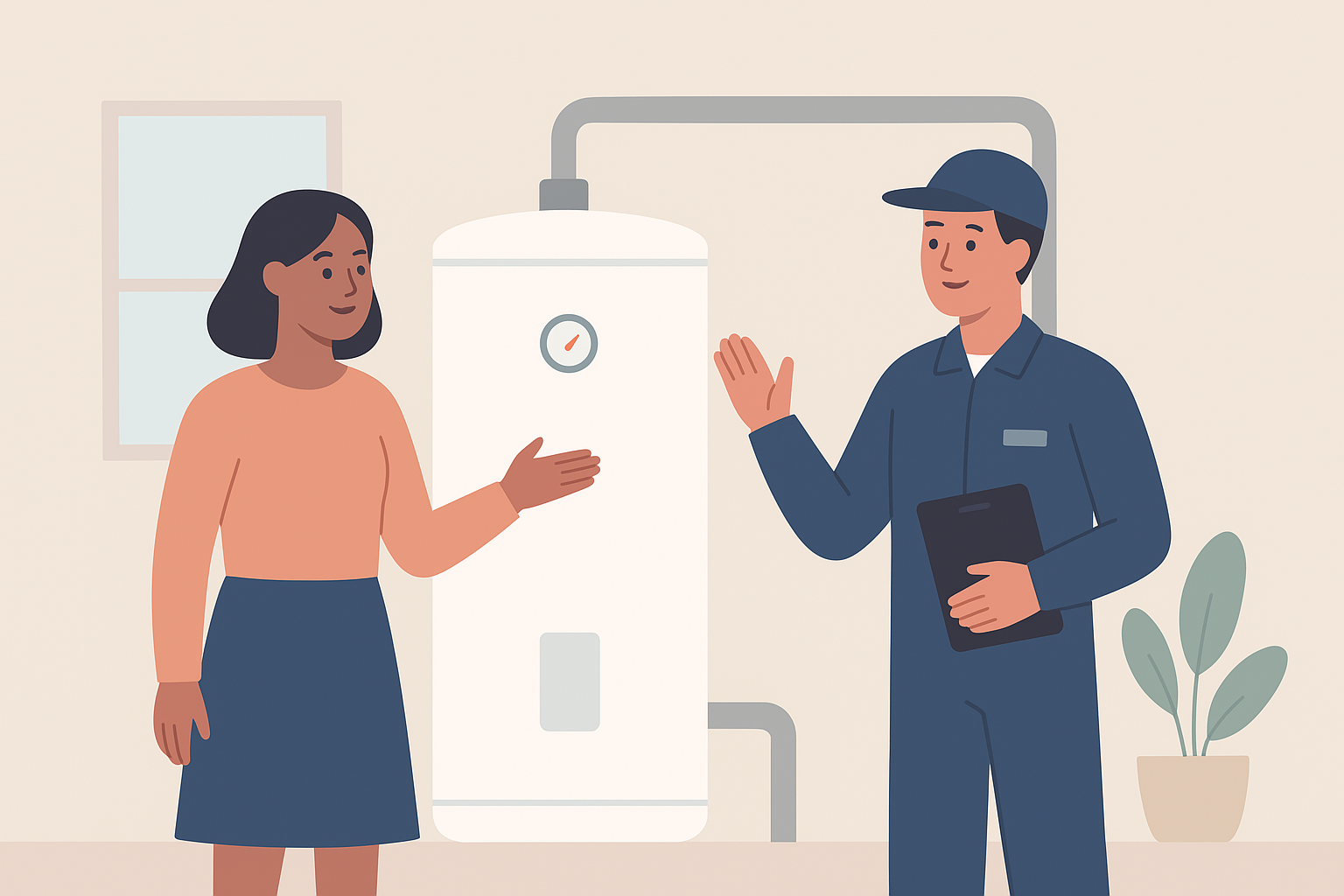
An unvented hot water cylinder stores heated water under mains pressure. Unlike older vented systems that rely on a cold water tank in the loft, unvented cylinders are fed directly from the mains supply.
That single difference changes everything. Because the pressure comes from the mains, you get stronger flow at your taps and showers. No more disappointing dribbles when someone turns a tap on downstairs.
How It Works
The cylinder heats and stores hot water supplied from the mains. The heating source is usually a gas boiler, although it can also be connected to heat pumps or electric immersion heaters as a back-up. When you turn on a tap, hot water is pushed out at mains pressure.
Mains Pressure Benefits
In practical terms, this means:
- Stronger showers without pumps
- Better performance in properties with more than one bathroom
- Consistent pressure across hot and cold taps
Space-Saving Advantages
Because there’s no need for a bulky loft tank, you free up roof space. We’ve seen plenty of customers in Horsham converting lofts and removing old tanks at the same time. It’s a cleaner, neater setup overall.
Do You Need a Boiler with an Unvented Cylinder?
In most cases, yes. An unvented hot water cylinder needs a heat source, and that’s typically a boiler.
Compatible Boiler Types
Unvented cylinders are commonly paired with:
- System boilers
- Regular boilers
A system boiler is often the simplest option because many of the components needed for pressurised systems are already built in. A regular boiler can also work well but may require additional controls and pipework adjustments.
Why Combi Boilers Are Different
A combi boiler doesn’t use a hot water cylinder at all. It heats water on demand directly from the mains. So if you already have a combi, adding an unvented cylinder usually means changing the boiler type as well.
We often get called out to homes in Crawley where customers have a combi but want better performance for two or three bathrooms. In many of those cases, switching to a system boiler with an unvented cylinder makes far more sense.
The Importance of Correct Sizing
This is where experience really counts. The boiler must be powerful enough to heat the cylinder efficiently, and the cylinder must be sized to suit your household’s demand. Too small and you’ll run out of hot water. Too large and you’re wasting energy heating water you’re not using.
Benefits of Installing an Unvented System
Stronger Water Pressure
The most noticeable improvement is pressure. If you’ve ever tried to shower while someone runs a tap in the kitchen, you’ll appreciate the difference immediately.
Ideal for Multiple Bathrooms
Homes with two or more bathrooms benefit hugely. An unvented cylinder stores a generous volume of hot water, so running a bath and a shower at the same time becomes realistic rather than risky.
Energy Efficiency Considerations
Modern unvented cylinders are well insulated. When combined with a high-efficiency boiler, heat loss is minimal. Many homeowners upgrading older gravity-fed systems notice improved heating controls and faster recovery times.
Key Installation Requirements
G3 Qualification
Unvented cylinders must legally be installed by an engineer with a G3 qualification. This is because they operate under pressure and include specific safety devices.
Safety Components and Discharge Pipework
Each system includes temperature and pressure relief valves and carefully installed discharge pipework. These must be fitted exactly to regulations. It’s not unusual in older properties around East Grinstead for pipe routes to need a bit of creative planning to meet current standards.
Annual Servicing and Maintenance
Like boilers, unvented cylinders should be serviced annually. This keeps safety valves working correctly and ensures expansion vessels are holding the right pressure. It’s straightforward maintenance but essential for safe operation.
Is an Unvented Cylinder Right for Your Home?
Property Size Considerations
Generally, the bigger the property and the higher the hot water demand, the more sense an unvented system makes. Flats with a single bathroom may be perfectly happy with a combi.
Water Pressure Checks
Because the system relies on mains pressure, we always test incoming flow rate and pressure first. Some older supply connections in parts of Horley and Crawley can be borderline and may need upgrades.
Budget and Long-Term Savings
The initial installation cost is usually higher than sticking with a simple combi. However, for larger households, the performance and reliability often justify the investment over the long term.
If you’re still unsure, ask yourself: Do you need a boiler with an unvented hot water cylinder? The answer depends on your property, your water pressure and how much hot water your household actually uses day to day. Safe Gas Heating & Plumbing can assess your current system and provide honest, practical advice to homeowners across Crawley, East Grinstead, Horley and Horsham.